What is a Pure-Play Foundry?
Published October 20, 2026
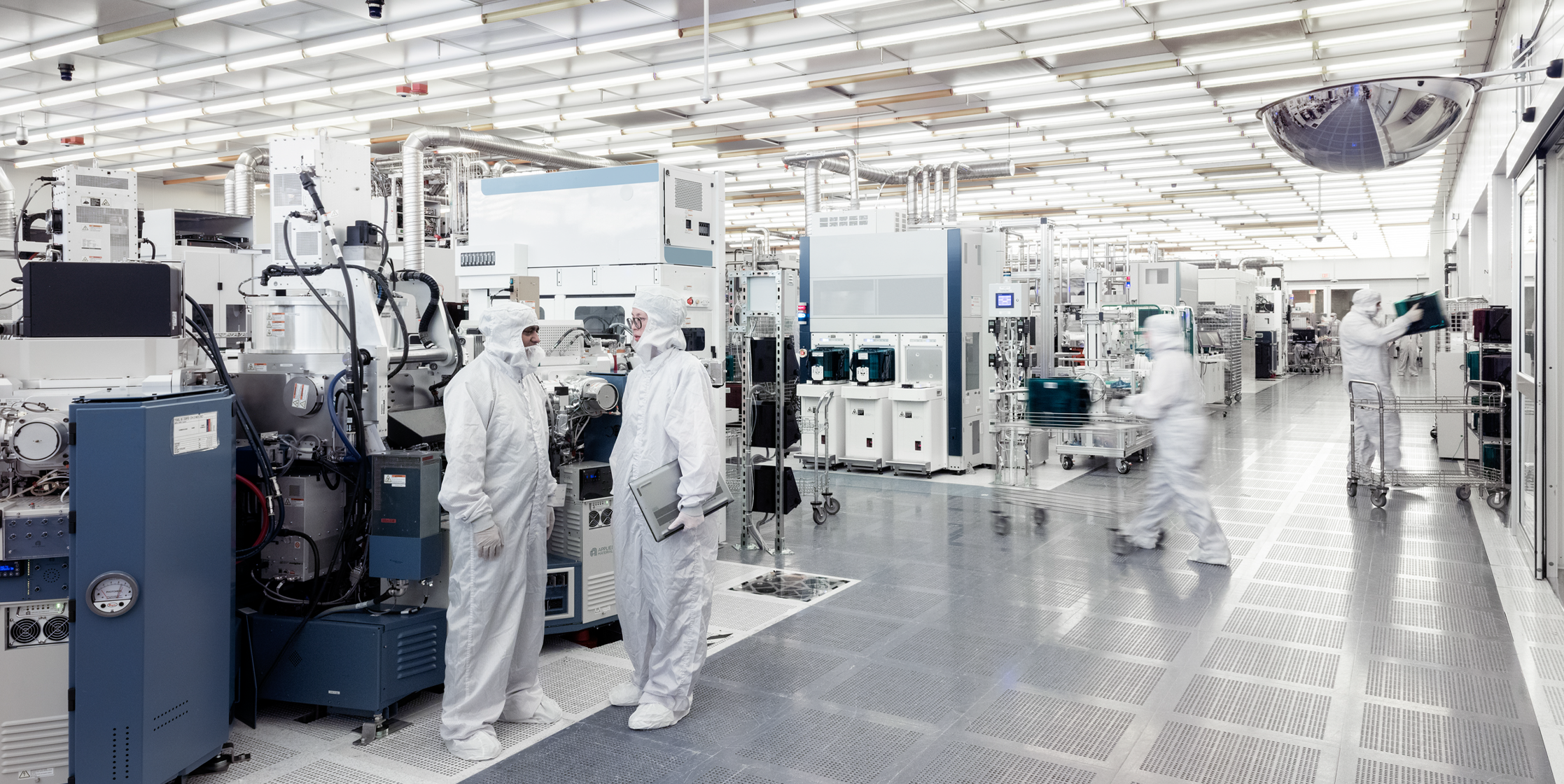
As quantum moves from research into commercial deployment, pure-play quantum foundries can provide industry-wide access to advanced semiconductor infrastructure.
Quantum is maturing quickly and an increasing number of businesses are making moves to implement technologies like quantum computing. For the next step, the industry needs dedicated manufacturing capabilities to reproducibly make high-quality quantum chips at scale. Providing this infrastructure is where pure-play quantum foundries like Anderon could play an important role.
Below we explain what pure-play quantum foundries are and answer common questions about them.
What is a pure-play quantum foundry?
A pure-play quantum foundry manufactures quantum chips for other companies without designing or selling any competing chips of its own.
The foundry model has been used in the semiconductor industry for decades, allowing many major chip companies to go “fabless” — meaning that they don’t own any fabrication facilities themselves. Companies responsible for designing some of the world’s leading chips are fabless, including Apple, NVIDIA, and AMD.
The model works similarly for quantum foundries like Anderon, but everything that goes into making the wafers is optimized to meet the exacting standards needed to produce high-performance quantum chips. This specialization includes but is not limited to: fabrication processes and tools, superconducting materials, IP for quantum components, wafer testing methods, and a quantum-experienced workforce. The technology offered by the quantum foundry is then described in quantum process design kits (PDKs), which customers use to design their chips for manufacturing.
Quantum foundries can serve a broad range of stakeholders across the quantum industry with differentiated needs, including fabless processor designers, quantum system builders, emerging startups, and researchers.
How is a quantum foundry different from a conventional semiconductor foundry?
A quantum foundry like Anderon is purpose-built for manufacturing quantum technology.
While it’s possible to make quantum chips using traditional semiconductor fabs, the demands of quantum processors differ significantly from classical chips — quantum-specific expertise and experience is needed to get it right. Because of this, using a non-specialized approach can risk creating chips with low-performing qubits that are not well isolated from noise sources or suffer from short coherence times.
What does a pure-play quantum foundry mean for chip quality?
A pure-play quantum foundry can significantly increase the quality of quantum chips produced compared to other fabrication options.
One way this happens is that the foundry model allows more companies to access technology that’s been shown to work. For instance, Anderon has incorporated proven quantum IP into its 300mm wafers for qubits, quantum I/O, and amplifiers and filters. These wafers support specialized components like superconducting Josephson junctions, multi-layer wiring, bump bonds, and through-silicon vias that have already been used in real-world quantum systems to achieve exceptional coherence and qubit isolation.
The use of 300mm wafers also plays a role in enabling high-performance chips. This size of wafer increases yield on a per-unit basis to boost production efficiency, but it also aligns with the semiconductor industry standard used for leading-edge chips. This means that a 300mm quantum wafer foundry can directly benefit from the latest tools and processes being developed for semiconductor fabs. In Anderon’s case, it uses advanced equipment designed for 300mm production lines to improve reproducibility at scale and help craft intricate circuit components with very high levels of precision.
Does a quantum foundry increase the speed for getting chips to market?
Quantum foundries allow more companies to access capabilities that can significantly compress timelines for getting new designs into markets.
For example, using quantum PDKs can make it much smoother for industry players to progress from a design concept to a finished device. It’s also faster to get reproducible chips from these designs by taking advantage of foundry-level process monitoring and control and production-ready fabrication.
Additionally, quantum organizations can move at a quicker pace by not having to spend time and money reinventing technology that already exists, instead building on top of proven options offered by the foundry.
Do pure-play quantum foundries compete with their customers?
No, pure-play quantum foundries like Anderon don’t compete with customers. Anderon doesn’t sell or design any chips of its own and was founded to provide quantum manufacturing for the industry as a whole. Anderon also uses well-established protocols and safeguards — honed from decades of lessons from semiconductor foundries — to keep customer designs and sensitive IP walled-off and completely safe.
However, it should be noted that not all quantum foundries are pure play and some might offer commercial fabrication services while also making their own competing chips.
How does a quantum foundry impact capital requirements for customers?
Quantum foundries can significantly reduce the capital requirements for customers by removing the need to build their own facilities.
Chip manufacturing facilities are intensive to build, requiring advanced equipment and tools, high-spec clean rooms, and a lot of time. Altogether, it can cost billions to establish a leading-edge fabrication capability.
With this enormous source of capital expenditure removed, quantum organizations can focus their resources on stronger ways to differentiate themselves, such as device performance, system architecture, or commercial strategy.